
Introducing Your Baby to a Kitten – What Parents Should Know


When we decided to bring a kitten into our family, I was both excited and a little nervous. I’ve always loved animals, and I wanted my baby to grow up with the joy and companionship of a pet. But I also knew it wasn’t as simple as plopping a kitten down next to the baby and hoping for the best. Babies and kittens both have their own needs, and I wanted to make sure their first meeting—and every one after—was safe and positive.
Looking back, I’m so glad we took the time to prepare. The process wasn’t perfect, but it turned into such a sweet journey for our family. I want to share what worked for us, what challenges we faced, and how we helped our baby and kitten grow into best friends.
Why I Wanted My Kids to Grow Up with Pets
There’s something magical about watching a baby and a kitten interact. Both are curious, playful, and learning about the world around them. Growing up alongside a pet can also offer your child several benefits:
- Emotional growth: Caring for a pet teaches empathy and responsibility, even from a young age.
- Physical development: Babies who grow up around animals often become more active as toddlers, joining in play and movement.
- Bonding and companionship: A kitten can become a lifelong friend to your child, creating shared memories from babyhood through childhood.
- Immune system boost: Studies suggest children who grow up with pets may have stronger immune systems and reduced risk of allergies.
That said, babies and kittens also come with their own needs—and sometimes, their instincts don’t align. The goal is to introduce them in a way that keeps everyone safe, comfortable, and happy.

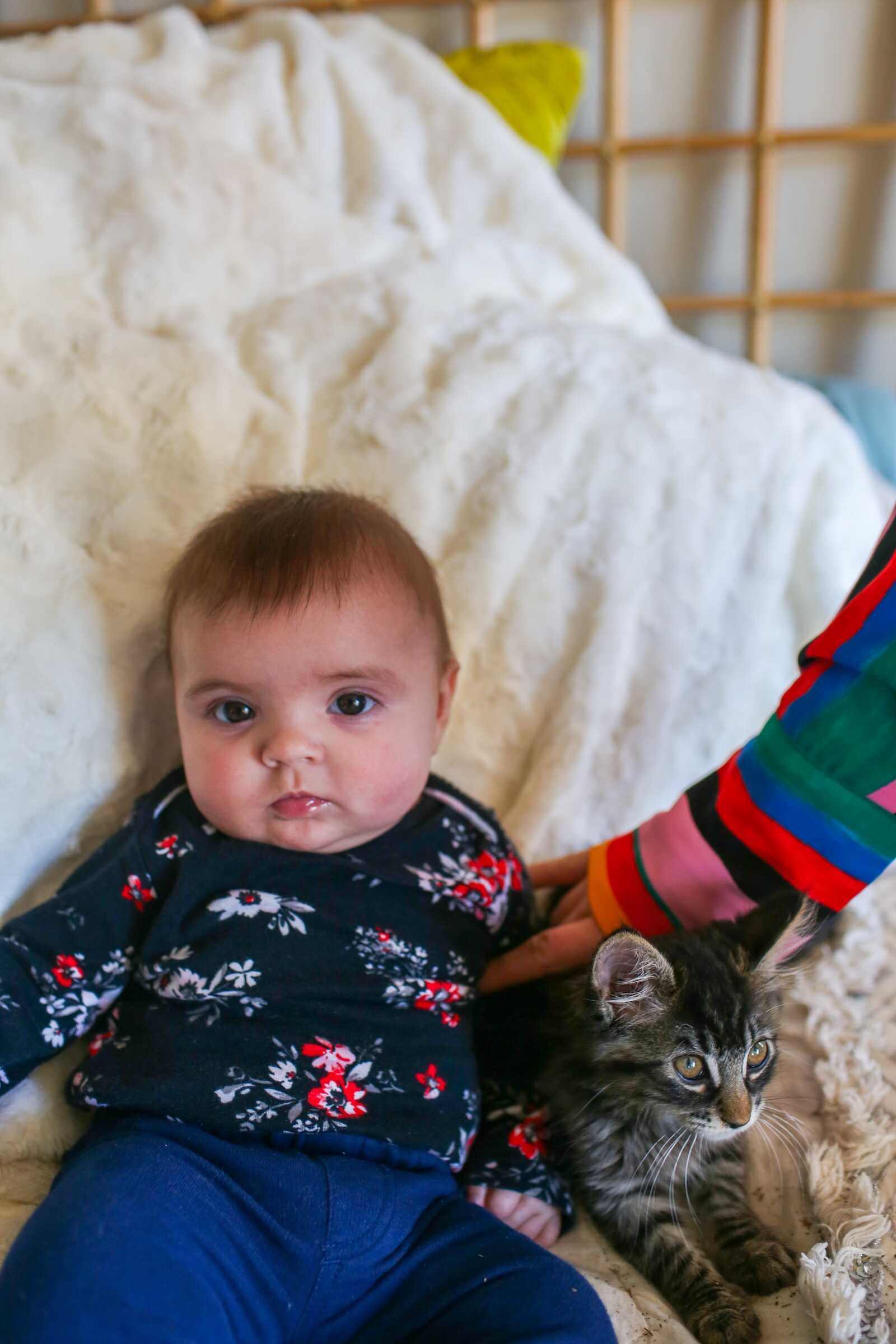
Preparing Your Home for a New Kitten
Create Safe Zones
Your baby and kitten will each need their own designated spaces. For your baby, that might be the crib, playpen, or a gated play area. For the kitten, it could be a quiet room with a litter box, scratching post, and cozy bed. Safe zones prevent overwhelming interactions and allow both to retreat when needed.
Set Up Boundaries
Baby gates, closed doors, or pet pens can help manage initial contact. Remember that kittens are agile and curious, so keep fragile baby items like pacifiers, bottles, and toys stored out of reach.
Gather Supplies
Stock up on kitten essentials—litter box, scratching post, toys, carrier, and food/water bowls. For your baby, make sure you have a plan for keeping bottles, formula, or snacks free from kitten contamination.
Schedule the First Meeting
Pick a quiet time when your baby is calm and your kitten is not overly energetic. Avoid scheduling introductions during your baby’s nap or feeding times to reduce stress.
The First Meeting: Step-by-Step Guide
Introducing your baby to a kitten isn’t about one single meeting—it’s a gradual process. Here’s how to do it:
Step 1: Keep the Baby Secure
Hold your baby in your lap or keep them in a car seat or bouncer. This prevents sudden movements that could startle the kitten.
Step 2: Let the Kitten Approach
Kittens are naturally curious. Allow the kitten to come close on their own terms, sniffing and observing. Don’t force interaction.
Step 3: Supervise Closely
Never leave your baby and kitten alone together, especially in the beginning. Stay close by to monitor body language from both sides.
Step 4: Teach Gentle Touch
Even infants can begin learning about gentle touch. Guide your baby’s hand to softly stroke the kitten’s back or side—avoid the face, tail, and belly. Narrating with phrases like, “Soft hands for kitty,” helps reinforce the concept.
Step 5: Keep It Short
End the first meeting after just a few minutes. Positive, short interactions are better than long, stressful ones.


Understanding Kitten Behavior Around Babies
Kittens are playful by nature. They may jump, swat, or bite as part of their normal development. When you have a baby in the mix, it’s important to anticipate these behaviors:
- Pouncing: A game for kittens, but startling for babies. Redirect with toys.
- Scratching: Sharp claws can hurt delicate baby skin. Keep claws trimmed and provide scratching posts.
- Nibbling: Kittens explore the world with their mouths. Redirect biting onto chew toys or plush mice.
If your kitten shows fear—flattened ears, hissing, hiding—respect their boundaries. It may take time before they feel comfortable around your baby.
Teaching My Baby (and Later Toddler) Respect
When my baby was little, I modeled how to touch the kitten gently. As my daughter grew into toddlerhood, the curiosity kicked in—grabbing tails, chasing, and wanting to “hug” the cat.
This was when teaching boundaries became important. I kept repeating simple rules:
- “We don’t pull tails.”
- “Gentle hands.”
- “Let kitty sleep.”
It took repetition and patience, but eventually my child learned that kindness gets rewarded with cuddles, while rough play makes the kitten hide.
Key Lessons:
- No tail pulling: Teach your toddler early that tails and ears are off-limits.
- Gentle petting: Demonstrate stroking with an open hand.
- No chasing: Let the kitten come to the child, not the other way around.
- Respect nap time: Kittens sleep up to 16–18 hours a day. A sleeping pet should not be disturbed.


Health and Safety Considerations
Litter Box Safety
Kittens need litter boxes, but babies should never have access to them. Keep the box in a room or area your baby cannot reach. Wash your hands after handling litter.
Vaccinations and Vet Visits
Schedule a vet appointment soon after adopting your kitten. Make sure vaccinations and deworming are up to date. This helps protect both your kitten and your baby.
Hygiene
Encourage frequent hand washing, especially before your baby eats. Keep kitten toys, food, and water bowls separate from baby items.
Allergies
If anyone in your family develops sneezing, watery eyes, or rashes, talk to your pediatrician or allergist. Sometimes introducing pets early reduces allergy risks, but not always.
Sleep Spaces
Never allow a kitten to sleep in the crib. While cozy, it poses risks of suffocation or accidental scratching.
Building a Bond Between Baby and Kitten
Playtime Together
As your baby grows, encourage joint play. Use wand toys or balls your child can roll for the kitten to chase. This builds positive associations.
Reading Time
Snuggle your baby with a book about cats while the kitten sits nearby. It helps create calm, shared moments.
Daily Routines
Allow your toddler to “help” with kitten care—pouring kibble, filling the water bowl (with supervision), or brushing the cat. Small tasks build responsibility and bonding.
Common Challenges and How to Solve Them
Challenge 1: The Kitten Scratches the Baby
Solution: Keep claws trimmed and provide scratching posts. Supervise closely and redirect play with toys.
Challenge 2: The Baby Pulls the Kitten’s Tail
Solution: Use gentle correction. Remove the kitten from the situation and remind your child with consistent phrases like, “Gentle hands.”
Challenge 3: The Kitten Steals Baby Toys
Solution: Keep baby toys stored away and provide plenty of kitten-safe alternatives.
Challenge 4: Nighttime Disturbances
Solution: Confine the kitten to a safe room at night to prevent climbing in the crib or waking the baby.
When to Seek Help
Sometimes, despite your best efforts, the relationship may not go smoothly. Seek guidance from:
- Your pediatrician: If your baby develops persistent allergies, rashes, or infections.
- Your veterinarian: For behavior issues like aggressive scratching or biting.
- Animal behaviorists: If your kitten shows ongoing fear or aggression toward your baby.
Early intervention helps ensure a safe, happy environment for everyone.
Watching Them Grow Together
The best part of this journey has been watching my child and our kitten grow together. What started as cautious sniffing and supervised pats has turned into a sweet friendship. My child talks to the kitten like a sibling, and the kitten curls up next to us during bedtime stories.
I won’t pretend it was effortless—it took a lot of supervision, patience, and teaching. But it was worth it. The bond they’re building is one of the most heartwarming parts of our family life.
Final Reflections
Bringing a kitten into a home with a baby can feel overwhelming at first, but if I’ve learned anything, it’s that patience and preparation pay off. By giving my baby and our kitten safe ways to meet, teaching respect from the beginning, and keeping health and safety in mind, we’ve created a home where both can thrive.
Now, when I hear them playing peacefully together, I know we made the right choice. It’s not just about raising a pet and a child—it’s about nurturing a beautiful friendship that will last for years to come.